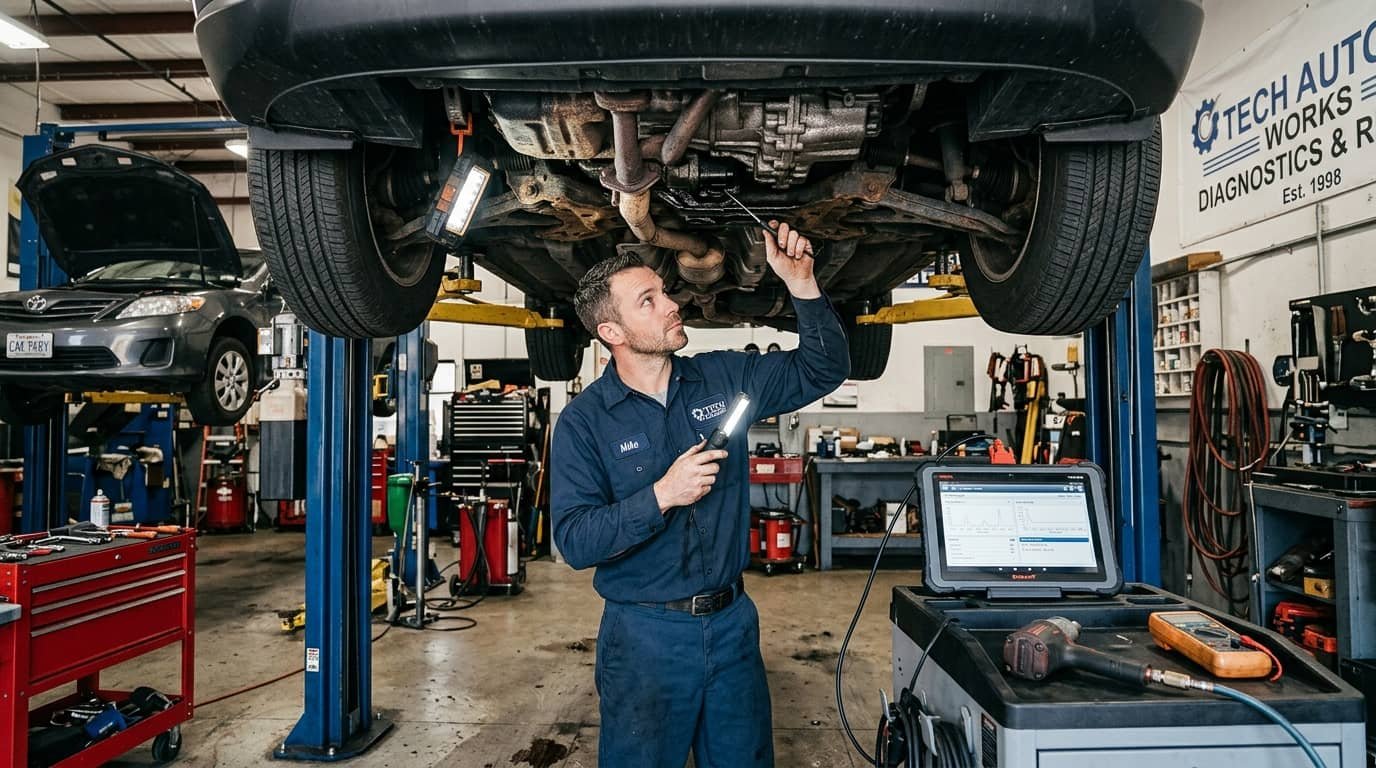
A used car pre-purchase inspection is one of the smartest investments you can make before handing over money on any vehicle.
A pre-purchase inspection is one of the smartest things you can do before buying a used car. You pay a mechanic you trust to look at a vehicle you are considering and tell you what they find. It is not glamorous, and it takes a bit of time, but it can save you from buying a problem you did not know you were getting.
Most shops charge between one hundred and two hundred dollars for a thorough inspection. That is a reasonable amount to spend on a purchase that could easily run into the thousands.
Run the VIN report first, then use the inspection to go deeper on anything the history raises questions about.
What a Used Car Pre-Purchase Inspection Covers
The specifics vary by shop, but a thorough pre-purchase inspection generally includes all of the following.
The engine and mechanical systems. The mechanic looks for leaks, worn components, signs of overheating, and issues with the belts, hoses, and cooling system. They will also check fluid levels and quality, since neglected fluids are often a sign of a car that was not well maintained.
The transmission. Whether it shifts smoothly, whether there is slipping or hesitation, and whether the fluid looks and smells right. Transmission work is expensive, so this matters.
The brakes and suspension. Brake pad and rotor condition, caliper function, and any noise or vibration in the suspension. These are safety items, and they are also wear items that cost money to replace.
The exhaust system. Rust, leaks, and whether the catalytic converter is intact. Catalytic converter theft is common enough that this is worth specifically confirming.
Computer diagnostics. The mechanic plugs a scanner into the vehicle’s diagnostic port to check for any stored error codes. A car can have active engine issues that do not show up as obvious symptoms until you pull the codes.
The body and undercarriage. Signs of prior accident damage, rust, frame concerns, or patchy repairs that were not disclosed. Uneven body gaps, mismatched paint, or overspray around trim pieces are physical signs that panels were worked on after a collision.
Interior and electrical systems. Windows, locks, air conditioning, heat, lights, audio. These sound minor, but adding them all up can represent real repair costs.
A test drive. How the car accelerates, brakes, steers, and handles. Any noise, vibration, or handling issue that does not show up on a lift becomes apparent when the car is actually moving.
How to Get a Pre-Purchase Inspection
Call a shop you trust, or one with strong local reviews, and let them know you are buying a used car and want a pre-purchase inspection. Most shops are familiar with this request and can give you a time estimate and a rough price over the phone.
Then arrange with the seller to bring the car to that shop. For a private seller, this is a reasonable ask. Most honest sellers will agree. A seller who refuses or becomes difficult about an inspection is telling you something worth knowing before you commit.
Some services also offer mobile inspections where a mechanic comes to the car rather than the car coming to the shop. This can be convenient for out-of-area purchases.
What to Do With the Results
The mechanic gives you a written report of what they found. Go through it carefully.
Some issues are minor wear items that will need attention eventually but are not urgent. Others are red flags that change the math on the deal entirely.
Use the findings as a negotiation tool if there are legitimate issues. A car with significant needed repairs is not worth the same as one in clean condition. Either ask the seller to reduce the price accordingly, or walk away if the issues are too serious.
Pair It With a VIN Check
The inspection tells you what the car looks and feels like right now. The VIN report tells you what the car has been through. Together, they give you the clearest picture possible before committing to a purchase.
Our article on how to do a VIN check walks through what that report includes and how to read it.
Pull the VIN history now before you schedule the inspection so you know what questions to ask the mechanic.
Frequently asked questions
How much does a pre-purchase inspection cost?
Most independent shops charge between one hundred and one hundred fifty dollars for a standard pre-purchase inspection. Specialty shops or those in high-cost markets may charge more. Some mobile inspection services come to wherever the car is located and charge a similar range. The cost is small relative to any used car purchase and even smaller relative to the cost of a surprise repair discovered after you buy.
Can you take a private seller’s car to any mechanic for inspection?
Yes. You can ask the seller to allow you to take the car to an independent mechanic of your choice before you commit to buying. The inspection typically takes an hour or two. A seller who will not allow this has a reason they are not sharing. That resistance alone is meaningful information. If a seller is reluctant, offer to do the inspection at a shop they suggest as long as it is independent and not affiliated with anyone they know.
What does a pre-purchase inspection not cover?
A pre-purchase inspection covers what the mechanic can physically observe and test during the inspection. It does not predict future failures of parts that currently function. It does not show historical damage that was repaired before the inspection. It does not replace the vehicle history report, which shows documented past events. The two checks together, VIN report and mechanic inspection, cover significantly more than either one alone.