What does a VIN check show? If you have never run one before, the answer can change how you approach every used car purchase.
A VIN check pulls together records from insurance companies, state DMV databases, federal systems, and other sources, and organizes them into a report on one specific vehicle.
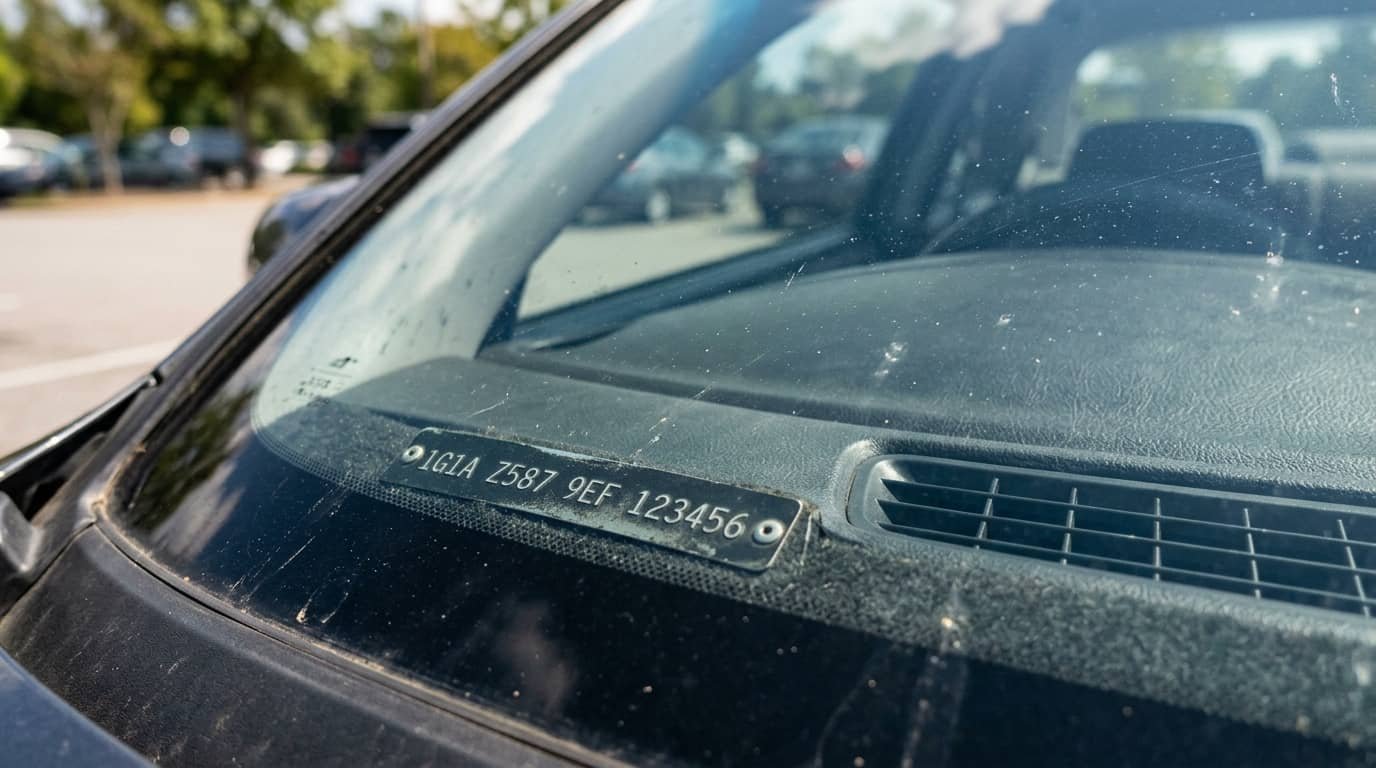
The 17-character VIN is the key that unlocks all of it. Every car built since 1981 has one, and it stays with the vehicle for life.
Here is what a vehicle history report typically shows and how to use what you find. See what is on record for the vehicle you are looking at and use this guide to read it.
What a VIN Check Shows: Title History
This is one of the most important sections. The report will show every state the car has been titled in and what status the title had at each point.
You want to see a clean title throughout the vehicle’s history. If you see any of the following, pay close attention:
- Salvage: the vehicle was declared a total loss by an insurer
- Rebuilt or reconstructed: the car was previously salvage, was repaired, and passed a state inspection
- Flood or water damage: the vehicle had serious water exposure
- Lemon law buyback: the manufacturer repurchased the car due to repeated defects
- Junk or scrapped: the vehicle was sent to a salvage yard at some point
Title brands follow a vehicle across most state lines, but not all. If you notice the car was registered in multiple states in a short period of time, that can sometimes indicate title washing, where a vehicle moves states specifically to lose a brand. Our article on what title washing is explains how that works.
Reported Accident History
The report will show accidents that were documented through insurance claims or official reporting channels. For each incident, you may see the date, the type of damage, whether airbags deployed, and whether the car was declared a total loss.
Keep in mind that accidents which were never reported to an insurer do not appear. A clean accident history means no reported accidents, not necessarily no accidents at all. Our article on what a VIN check shows about accidents explains this in more detail.
Odometer Readings
The report compiles mileage readings recorded at title transfers, state inspections, insurance events, and dealer auctions. Laid out in order, these readings show whether the mileage has gone up consistently over time.
A mileage reading that drops between entries is a sign of odometer rollback. Large unexplained gaps in the timeline are also worth questioning. More on this in our article on what a VIN check shows about mileage.
Number of Previous Owners
The report shows how many times the vehicle changed hands. A car with many previous owners in a short period of time is worth looking at more carefully. It can sometimes mean the car has been a problem for several people who moved it along quickly.
The report will not give you the personal details of past owners due to privacy laws, but the count and the states the car was titled in will be visible.
Theft Records
If the car was ever reported stolen, that record should appear. A vehicle that was stolen and recovered may have damage from the theft period that was never properly documented. A stolen vehicle that was never recovered and somehow ended up back on the market is a more serious issue.
The National Insurance Crime Bureau also offers a free basic VIN check specifically for theft and salvage records through their NICB VINCheck tool.
Open Recalls
Many vehicle history reports include a recall check. This shows whether the manufacturer has issued any safety recalls on the vehicle and whether they have been completed.
Open recalls are not necessarily a dealbreaker. Recalls are repaired at dealerships, often at no cost. But you want to know before you buy so you can get it handled.
Lien Information
Some reports will indicate whether there is an active lien on the vehicle, meaning a lender has a financial claim on it. If a seller still owes money on a car loan, the lender technically owns the title until that loan is paid off.
Buying a car with an undisclosed lien can create serious problems when you try to register it. Always confirm lien status before you hand over money.
Usage History
The report may also show whether the vehicle was ever used as a rental car, a fleet vehicle, a taxi, or a lease vehicle. These are not automatically disqualifying, but they are relevant. A rental car with 60,000 miles was driven by many different people under varying levels of care. That is different from a car owned by one person for the same miles.
What a VIN Check Does Not Show
It is worth being honest about the limits. A vehicle history report does not show:
- Accidents that were never reported to an insurer or police
- Repairs done privately without involving an insurance company
- Mechanical condition or current problems with the car
- Personal information about previous owners
- Every service record unless the shop reported to a participating database
The report is a critical tool, but it is not a substitute for a physical inspection. Use both.
Run a VIN check on the car you are considering and see what the full history shows before you make any decisions.
Frequently asked questions
Is a free VIN check as good as a paid vehicle history report?
Free VIN checks typically give you basic information like the year, make, model, and sometimes a limited history summary. Paid reports from services that aggregate data from insurers, motor vehicle departments, auctions, and inspection stations give you the full picture including mileage history, title brands, accident records, lien status, and recall information. For any serious purchase, the paid report is worth the cost.
How long does a VIN check take?
Two minutes or less. You enter the 17-character VIN and the report generates immediately. There is no reason to delay running one or to wait until you are standing in front of the car. Running it before you go to see the car is the most useful approach because it lets you evaluate the history before you have invested any time or emotion in the vehicle.
Can a VIN check tell you if a car is stolen?
Yes. Vehicle history reports check the VIN against stolen vehicle databases including the National Insurance Crime Bureau. If a car was reported stolen, that record appears in the report. Buying a stolen vehicle, even unknowingly, can result in the car being seized and the buyer losing both the vehicle and the money paid for it.