
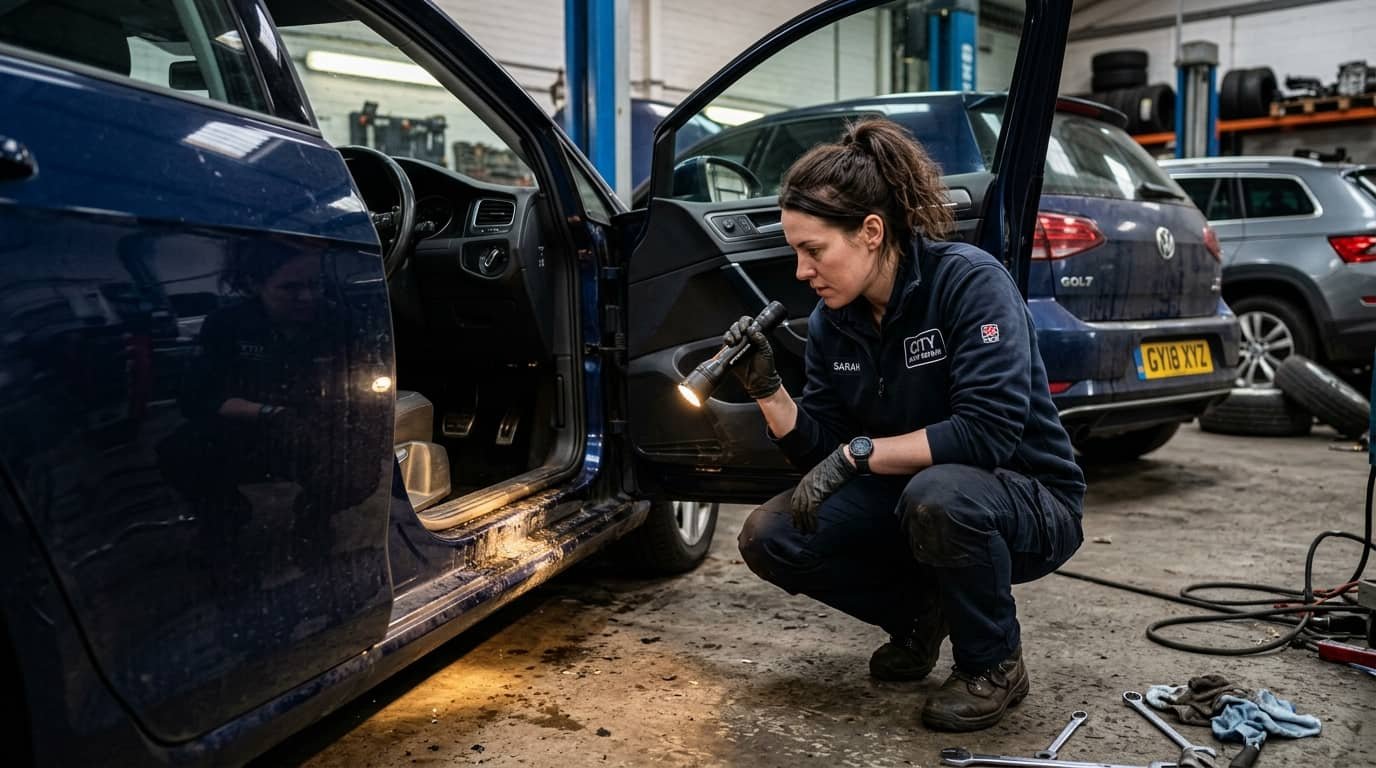
Knowing how to tell if a car was flooded before you buy is one of the most valuable checks you can do.
Flood-damaged cars are one of the most dangerous used car purchases you can make. The problems they cause are not always obvious at first, and they can take months or even years to fully show up.
After major hurricanes and storms, thousands of flood vehicles get dried out, cleaned up, and quietly resold on the private market. Some end up several states away from where the flooding happened, with no obvious signs that anything is wrong.
The good news is that there are things you can check before you buy. Start with the VIN. See what is on record for this vehicle and check whether any flood or water damage has been reported. Then use the physical checks below to look for what a report might miss.
Why Knowing How to Tell If a Car Was Flooded Matters
When a car goes underwater, water gets into places that cannot be fully dried or cleaned out. That includes the wiring harness, the insulation behind door panels, the foam under the seats, the air ducts, and the electrical modules throughout the car.
Water causes corrosion in electrical connections. It promotes mold growth inside the cabin. It can contaminate the engine oil and transmission fluid. It can damage the airbag control module so the airbags may not deploy correctly in a crash.
A flood car can look and drive fine for a while. The problems often show up gradually, and by the time they do, you already own it.
Check the VIN History First
Before you see the car in person, pull the VIN report. A vehicle history report can show whether the car was ever given a flood or water damage title brand, whether it passed through states known for hurricane flooding, and whether insurance claims were filed around storm events.
A clean report does not guarantee the car was never flooded. Not all flood damage gets reported. But a report showing a flood title brand or a salvage designation following a major storm is a clear signal to walk away.
What to Check in Person
Smell the interior as soon as you open the door.
This is often the most immediate tell. A musty, mildy, or sour smell that does not go away is a strong sign of water damage. Sellers sometimes use heavy air fresheners to cover it up. If the car smells unusually perfumed for a used vehicle, that is itself worth noting.
Close all the doors and windows, sit inside for a minute, and just breathe. Mold odor is very hard to eliminate completely once it gets into foam and insulation.
Check under the carpets and floor mats.
Lift the floor mats and press down on the carpet underneath. Feel for dampness. Look for water stains on the carpet or the foam padding beneath it. If the carpet looks newer than the rest of the car’s interior, it may have been replaced to hide damage.
Look for silt and debris in hidden areas.
Flood water carries dirt and sediment into places that are hard to reach and even harder to clean. Check under the seats, inside the trunk along the seams, inside the spare tire well, and around the edges of the engine bay. Fine dirt or dried mud in those areas is a strong sign the car was submerged.
Inspect the lights for moisture.
Look inside the headlights and tail lights. Fogging, water lines, or condensation trapped inside the housing suggests the car was in water deep enough to reach those areas. Moisture inside sealed light housings should not be there on a dry vehicle.
Check for rust in unusual places.
A little surface rust on older cars is normal. Rust in places that are normally protected, like the seat mounting bolts, brake pedal, door hinges, and inside the hood, is not. If you see heavy or accelerated corrosion for the car’s age, that is a red flag.
Check the engine oil and transmission fluid.
Pull the dipstick and look at the oil. It should be brown to black. If it looks milky, foamy, or has a strange color, water may have gotten into the engine. Same goes for the transmission fluid. This alone is serious enough to stop the inspection.
Test every electrical function.
Windows, locks, heated seats, radio, backup camera, turn signals, AC, and every button and switch you can find. Flood damage causes electrical problems that often show up as intermittent failures. Something that works today may stop working in two weeks. If anything is not functioning, ask why.
Look for a water line inside the trunk.
Open the trunk and look along the walls for a faint horizontal line. This is where the water reached. It is one of the clearest physical signs that a car was submerged.
Be Careful About Where the Car Came From
Flood vehicles often travel. After a major hurricane, it is not unusual for damaged cars to be cleaned up and shipped to other states where the buyers are less likely to associate the car with the storm.
If a car’s history shows it was registered in a flood-prone area around the time of a major storm event, or if ownership changed shortly after a well-known hurricane, pay extra attention during your inspection.
When to Walk Away
Walk away if you notice any combination of these:
- Musty or moldy smell inside the cabin
- Damp carpet or foam under the mats
- Silt or debris in the trunk, under the seats, or in the engine bay
- Moisture inside the headlights or tail lights
- Unusual rust on seat bolts, pedals, or door hinges
- Milky or foamy engine oil
- Any electrical components not working
- A flood or water damage title brand in the VIN report
One of these on its own might have an innocent explanation. Several of them together means the car was in water and you should not buy it.
Check the VIN history before you see the car in person and go into the inspection knowing what the records already show.
Frequently asked questions
Can flood damage be repaired well enough to buy safely?
It depends on the depth and duration of the submersion and the quality of the repair. Vehicles that were briefly exposed to shallow water and properly dried and restored can be serviceable. Vehicles that were fully submerged, especially in saltwater, typically suffer corrosion and electrical damage that is very difficult to fully remediate. The safest approach is to have any car with a flood history inspected by an independent mechanic before buying.
Does a VIN check always show flood damage?
Not always. Flood damage shows up in the VIN report when an insurance company files a claim and declares the vehicle a total loss, or when the car passes through a salvage auction with a flood designation. Damage that was never reported to an insurer, or vehicles repaired privately and never declared a total loss, may not appear in the report. Physical inspection is still necessary even after a clean VIN report.
What happens to flood-damaged cars that are not properly disclosed?
They get cleaned up, detailed, recarpeted, and listed for sale looking normal. After major storms, tens of thousands of flood-damaged vehicles enter the used car market without proper disclosure. The damage surfaces months later in electrical failures, corrosion, and mold. Buyers who discover the history after purchase have legal recourse in most states if the seller knowingly concealed it, but recovering money from a private seller is often difficult in practice.