
Knowing how to spot a flood damaged car before you buy is one of the most important checks in used car shopping.
Flood cars are one of the most dangerous used car purchases you can make, and they are not always easy to spot. Water damage does not always look like water damage. A car can be professionally detailed, have its carpets replaced, and look completely normal inside while hiding corrosion, electrical damage, and mold that will surface months after you buy it.
After major storms and hurricanes, flooded vehicles often get moved to other states and relisted on the private market without disclosure. Knowing what to look for and how to check the history is the only reliable protection.
Run the VIN first to see whether this vehicle has a flood title or any reported total loss in its history.
Why Knowing How to Spot a Flood Damaged Car Before You Buy Matters
Water gets into everything. Electrical systems, control modules, airbag sensors, and wiring harnesses are all vulnerable. A car’s airbag controller sitting in floodwater can corrode in ways that are not visible but cause the airbag to fail or deploy unexpectedly in an accident.
Beyond electronics, mold grows in places you cannot see or smell until it is well established. Corrosion builds up on metal components under seats, inside door panels, and beneath the dashboard. These problems do not always show up right away. They surface over months and years.
Check the VIN History First
Before you spend time inspecting the vehicle in person, check the VIN report. A flood title or salvage designation tied to water damage will often show up in the vehicle’s history if it was reported to insurance. That record can save you the trip entirely.
Also be aware of title washing. This is when a flood-branded vehicle gets re-registered in a state with looser title branding requirements, and the flood history becomes less visible in records. It does not erase the history entirely, but it can make it harder to find. Our article on how title washing works covers this in more detail.
What to Look For Inside the Car
Use your nose first. A musty or mildewy smell that does not go away when the windows are open is one of the clearest signals. Sellers sometimes use heavy air fresheners or fragrances to mask it, which is itself a flag worth noting.
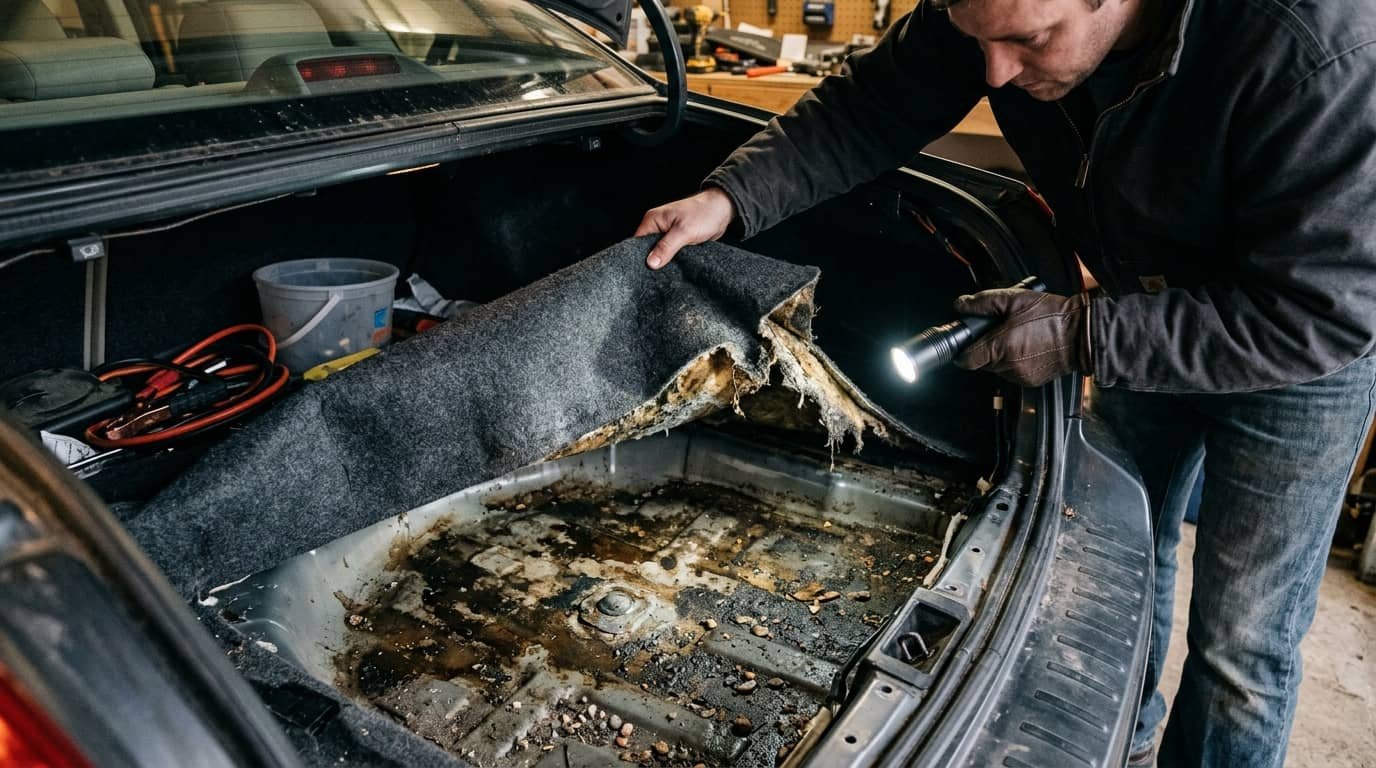
Check the floors. Pull back the carpet in the trunk and under the rear seats. Look for a water line, sand, silt, or mud that was not fully cleaned out. These materials settle in places that are hard to reach and often get overlooked in a cleanup job.
Pull the seat belts out all the way and look at the webbing near the bottom. Water causes discoloration and stiffness in the belt fabric that is hard to fake.
Look at the screw heads under the dashboard and in the engine bay. Bare metal screws that are not painted or coated will rust quickly when exposed to water. Fresh rust on screws that should not have rust is a sign.
Check the headlights and taillights for fogging or condensation inside the lenses. Water that gets into a sealed lighting assembly does not evaporate easily and often leaves a residue or persistent fog.
What to Check Under the Hood
Pull the engine oil dipstick and look at the oil. Water contamination makes oil look cloudy or like a grayish milkshake. That is a serious sign.
Check the air filter housing. If floodwater reached the air intake, the cardboard frame of the filter will look warped, stained, or disintegrated.
Look at the wiring harnesses for corrosion or unusual stiffness. Factory wiring is designed to last the life of the vehicle. Wiring that has been submerged and dried out often becomes brittle and develops corrosion at the connectors.
Test Everything Electrical
Turn on every electrical system in the car. Lights, windows, climate control, audio, wipers, turn signals. Any system that is slow to respond, intermittent, or does not work at all is a possible sign of water damage in the electrical system.
This is also worth doing because electrical problems from flood damage can develop gradually. What works today may not work in six months, and these repairs are expensive.
Get an Independent Inspection
If you are seriously considering a used car and have any doubts, get a mechanic you trust to do a pre-purchase inspection. Tell them specifically to look for signs of water intrusion. A good mechanic will lift the car and look at components underneath where water damage and corrosion often settle.
The Bottom Line
Flood cars are cleaned up and resold every year. Some buyers knowingly take on the risk at a steep discount. Most buyers who end up with one did not know what they were buying.
The combination of a VIN history check and an in-person inspection covers most of the risk. Do not skip either step.
Check the vehicle’s title and damage history now before you go any further with this car.
Frequently asked questions
What long-term problems develop in flood-damaged cars?
Electrical failures are the most common long-term issue, often appearing months after the car looks and drives fine. Corrosion develops in wiring harnesses, connectors, and electronic modules that were submerged. Mold grows in the HVAC system and cabin materials. Rust develops on structural components and undercarriage parts that were not fully dried and treated. Sensors and control modules can fail unpredictably. The longer the submersion and the deeper the water, the more severe and widespread these problems tend to be.
How do you check for flood damage at an auction or private sale where inspection time is limited?
Focus on the fastest indicators: open the trunk and check the spare tire well for sand, silt, or a water line. Pull the carpet back at the edges. Check screw heads in the door jambs and under the dash for rust that would not be there on a car that was never submerged. Look at the seatbelt webbing near the base for discoloration. Smell the interior with the vents off. These checks take less than five minutes and catch the majority of flood cars that were not professionally cleaned.
Does saltwater flood damage cause more problems than freshwater?
Yes, significantly. Saltwater is far more corrosive than freshwater. A vehicle submerged in saltwater, even briefly, will experience accelerated corrosion on metal components, wiring, and connectors. The damage is harder to remediate completely and tends to progress faster. Cars from coastal flooding events after hurricanes are more concerning than those from inland freshwater flooding, all else being equal.