
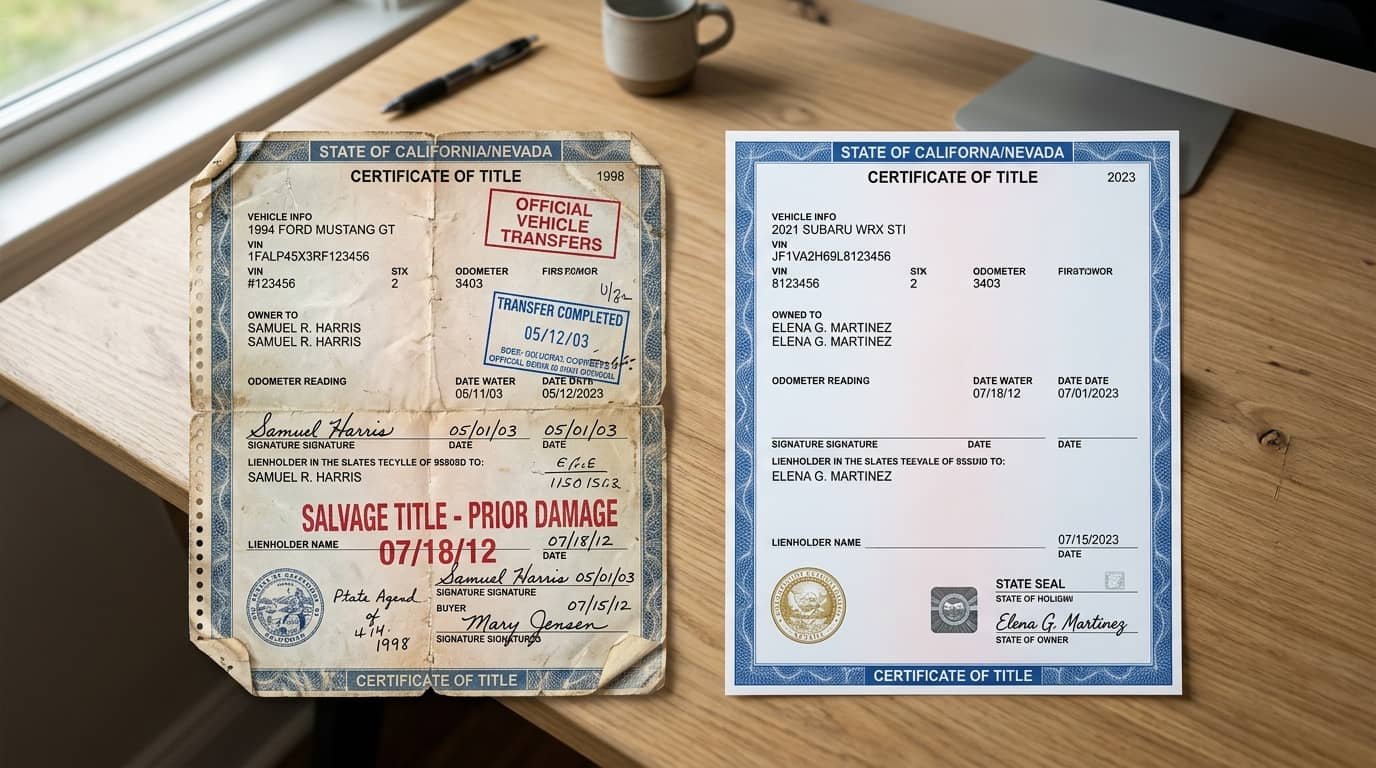
The difference between a clean title vs salvage title affects insurance, financing, and resale value.
When you are shopping for a used car, you will see these two title types come up constantly. Understanding the difference before you buy can save you from a costly mistake.
The short version: a clean title is what you want to see. A salvage title is a permanent flag that something serious happened to the vehicle. But the full picture is a little more nuanced than that, and knowing the details matters.
Check the title history on any vehicle you are considering before you get too far into a deal.
What a Clean Title Means
A clean title means the vehicle has never been declared a total loss by an insurance company, and its title has not been branded with any significant designation such as salvage, rebuilt, flood, lemon, or junk.
That is what a clean title means. What it does not mean is also important.
A clean title does not mean the car was never in an accident. It does not mean the car is in perfect condition. It does not mean the seller is being honest with you. Plenty of cars with clean titles have been in accidents that were repaired privately without an insurance claim, which means nothing shows up on the title or the history report.
A clean title is a good starting point. It is not the end of your research.
What a Salvage Title Means
A salvage title is issued by the state when an insurance company declares a vehicle a total loss. The threshold varies by state but is generally when repair costs approach or exceed 75 to 90 percent of the car’s value.
A salvage vehicle cannot be legally driven on public roads. It has to be repaired and pass a state inspection before it can be re-registered and driven again. Once it clears that process, it gets a rebuilt title, not a clean one. The salvage history stays attached to the vehicle permanently.
Total loss events that trigger a salvage title include serious collisions, flood damage, fire, hail, and theft recoveries where the vehicle was damaged while missing.
Why Clean Title Does Not Always Mean Safe
This is the part most buyers miss.
A seller can have a car with a clean title that has a serious, undisclosed accident history. If the damage was never reported to an insurance company, no claim was filed, no total loss was declared, and the title stays clean. The car gets repaired by a private shop, listed for sale, and the buyer sees a clean title and assumes everything is fine.
This is why running the full VIN history matters even on a clean title car. The history report pulls from more sources than just the title. It may show reported accidents, damage events, mileage inconsistencies, or other records that do not appear on the title itself.
Our article on what title washing is explains another way that title history can be manipulated, where a car with a branded title moves through multiple states specifically to shed that brand.
Practical Differences for Buyers
Insurance: A clean title car is insurable without restrictions. A salvage title car typically can only get liability coverage, if it can be insured at all. A rebuilt title car can sometimes get full coverage but often at higher rates and with limitations.
Financing: Lenders will finance clean title cars. Most will not touch a salvage title, and many are hesitant about rebuilt titles. If you need a loan, a clean title is effectively a requirement.
Resale value: Clean title cars retain their value significantly better. A salvage or rebuilt title reduces resale value by 20 to 40 percent compared to a similar clean title vehicle, and that gap does not close over time.
Registration: A salvage title car cannot be registered for road use until it is repaired and inspected. A clean title car can be registered immediately.
When You Are Looking at a Clean Title Car
Do not let the clean title make you skip the VIN check. Run the history, look at the reported accident records, check the odometer history, and confirm the title was never branded in another state before it came to where the seller is now.
If anything in the report does not match what the seller told you, that is worth a conversation before you go any further.
When You Are Looking at a Salvage Title Car
Understand the full scope of what you are taking on before you decide. Check the VIN to find out why the salvage title was issued, get an independent mechanic inspection, confirm your state’s requirements for converting salvage to rebuilt, and check with your insurer about what coverage is available.
Our article on buying a car with a salvage title covers all of that in detail.
The title type is one of the first things to look at, but it is never the only thing. Check the full vehicle history on any car you are seriously considering, clean title or not.
Frequently asked questions
Can a salvage title car become a clean title car again?
No. Once a vehicle receives a salvage title, that history is permanent. A salvage vehicle that is repaired and passes a state inspection can receive a rebuilt title, which allows it to be registered and driven legally. But it will never return to a clean title status. The rebuilt designation stays with the vehicle and appears on every future VIN check regardless of how many times it changes hands.
Does a clean title guarantee a car has no damage history?
No. A clean title means the car was never declared a total loss by an insurer. It does not mean the car was never in an accident. Accidents that were settled privately without an insurance claim, minor damage that was repaired without a claim, and unreported incidents will not appear in the title history. A clean title is a good starting point but it is not a guarantee. A mechanic inspection is still necessary.
Which is harder to insure, a salvage title or a rebuilt title?
Salvage title vehicles are the hardest to insure because they have not been repaired and inspected. Most insurers will not write a policy on a salvage vehicle at all beyond basic liability in some states. Rebuilt title vehicles have more options because they have been through an inspection process, but many insurers still limit coverage or charge higher rates than they would for a clean title vehicle of the same make and model.