
Knowing how to check if a car has been in an accident before you pay is one of the most important things a buyer can do.
Not every seller will tell you the car you are looking at has been in an accident. Some do not know. Others know and do not mention it. And some accidents are significant enough to affect the car’s structural integrity, safety systems, and long-term reliability in ways that are not obvious from the outside.
Here is how to check before you commit to anything.
Run the VIN now to see reported accident history and title records for this vehicle.
How to Check If a Car Has Been in an Accident: Start With the VIN Report
A VIN report pulls together records from insurance companies, repair facilities, state DMV offices, and auto auctions. If an accident was reported to insurance, it often shows up here with details about the severity and which parts of the vehicle were affected.
The report will not catch every accident. A minor fender bender that was paid out of pocket and never filed with insurance may not appear. But significant collisions, total loss events, and anything that resulted in a title brand will typically show up.
Look specifically for the number of reported incidents, the severity descriptions, and whether any event resulted in a salvage or rebuilt title. Our articles on what a salvage title means and what a rebuilt title means explain what those designations mean for the car you are considering.
Check the Title History
A salvage or rebuilt brand on the title tells you the car was totaled at some point. That is the most significant kind of accident history because it means the damage was serious enough for an insurer to declare the car a total loss.
Absence of a title brand does not mean absence of accidents. It means no accident was severe enough to trigger a total loss declaration. The car could still have significant prior damage that was repaired without ever reaching that threshold.
Look at the Car Physically
Repaired accident damage leaves signs that a careful look can find. You are not expected to be a professional appraiser, but these are things anyone can check:
Body panel gaps. Step back from the car and look at the gaps between the doors, hood, trunk, and fenders. These gaps should be consistent and even all the way around. Gaps that are wider on one side, or that pinch and then open, suggest the panels were not restored to factory alignment after repair.
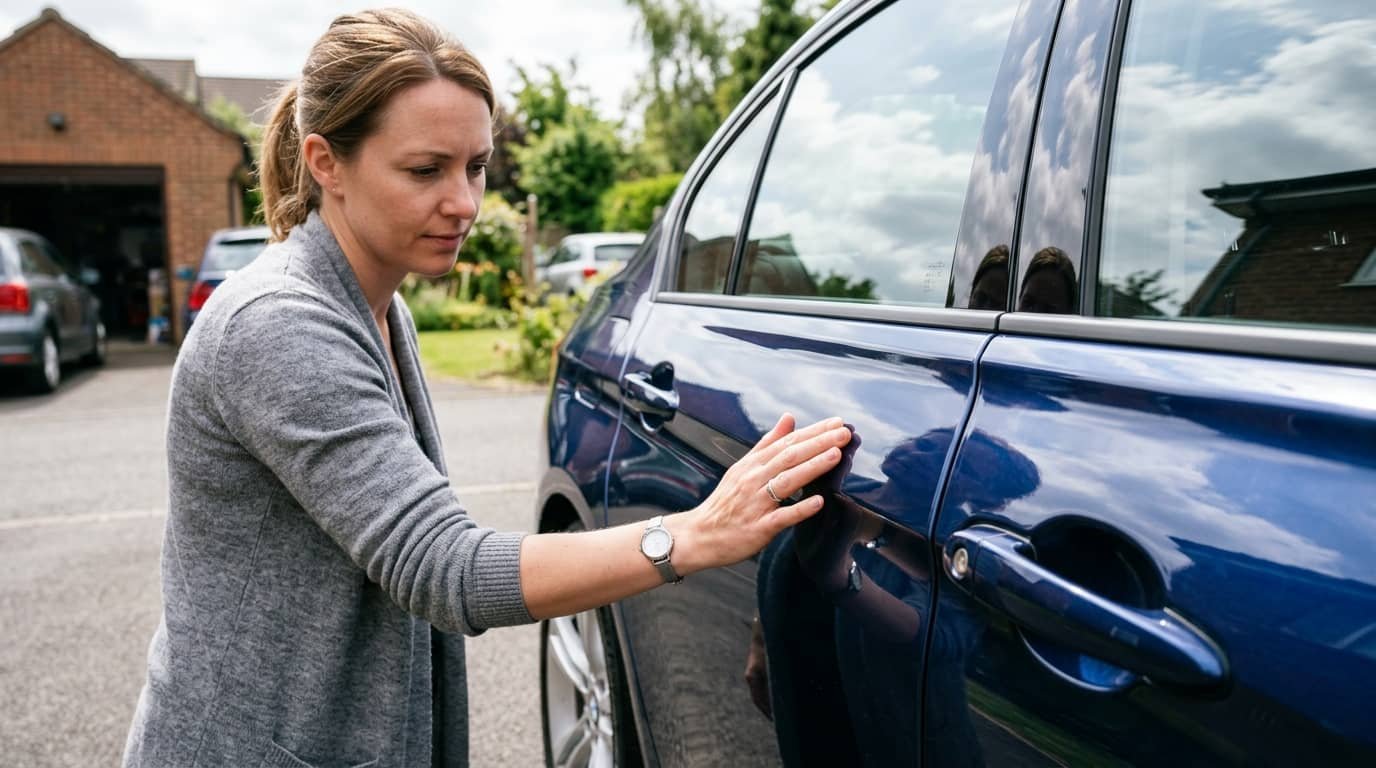
Paint inconsistency. Look along the car’s surface in good light. Paint that was refinished after a repair often has a slightly different texture, depth, or color match than the original. Hold your phone flashlight against the surface at an angle and look down the length of the panel. Waves, orange peel texture differences, or color shifts are visible this way.
Overspray. Look at the rubber seals around doors and windows, the door jambs, and the trim pieces. Paint overspray in those areas suggests a panel was painted without being removed, which is common in less careful repair work.
Tire wear. Uneven tire wear, especially wear on the inner or outer edge of a tire, can indicate that a suspension or steering component was bent in a collision and not properly corrected. This is a safety issue as well as a wear issue.
Mismatched bolts. Look at the bolts that hold structural components and body panels in place. Factory bolts are consistent. Bolts that have been removed and re-torqued, or replaced with different hardware, sometimes show tool marks or a different finish.
Get a Mechanic to Look Underneath
A visual inspection from the outside misses a lot. The most important structural damage is often underneath the car, where frame rails, subframes, and suspension mounting points absorb impact forces.
A pre-purchase inspection with the car on a lift gives a mechanic a clear view of the undercarriage. They can see frame damage, welded repairs, bent components, and signs of structural work that are invisible from the outside. Our article on what a pre-purchase inspection covers explains how that process works.
Ask the Seller Directly
Ask a direct question: has this car been in any accidents or had any bodywork done? The answer tells you something either way. A seller who says no and the car has obvious evidence of repair is being dishonest. A seller who volunteers details about a minor repair and can describe what was done is being transparent.
You cannot verify honesty through conversation alone, which is why the VIN check and the physical inspection matter. But the seller’s answer to a direct question is part of the picture.
The Bottom Line
No single check catches everything. The VIN report catches reported accidents. The physical inspection catches signs of repair. A mechanic on a lift catches structural damage. Together they give you a much more complete picture than any one step alone.
Check the reported accident history on this VIN now and use that as your starting point.
Frequently asked questions
Can you tell if a car was in an accident just by looking at it?
Sometimes, but not reliably. Obvious signs like mismatched paint, uneven body panel gaps, and visible rippling in the sheet metal are detectable by eye. But professional body repairs can look nearly perfect from the outside while still hiding structural issues underneath. A car that has been through a high-quality body shop repair may show no visible evidence of the accident at all. That is why a VIN check for reported accident history and a mechanic inspection of the frame and structural components are both necessary.
What tools do body shops use to detect prior repairs?
Paint thickness gauges measure the depth of paint on body panels. Factory paint is applied at a consistent depth across the car. Repainted panels show thicker readings because they have the original factory coat plus the new paint on top. A significant difference in readings between adjacent panels is a reliable indicator of prior repair or replacement. Many mechanics and inspectors use these gauges as a standard part of a pre-purchase assessment.
What is the most important thing to check if a car was in an accident?
Whether any structural damage was involved. Frame damage, damage to structural rails, or impact that affected the car’s safety cage changes the vehicle’s crash performance in any future accident. Airbag deployment in a prior accident raises questions about whether the airbag system was properly restored. A mechanic who can put the car on a lift and assess the frame, suspension mounting points, and unibody structure is the most reliable way to evaluate the actual consequences of a prior accident.