
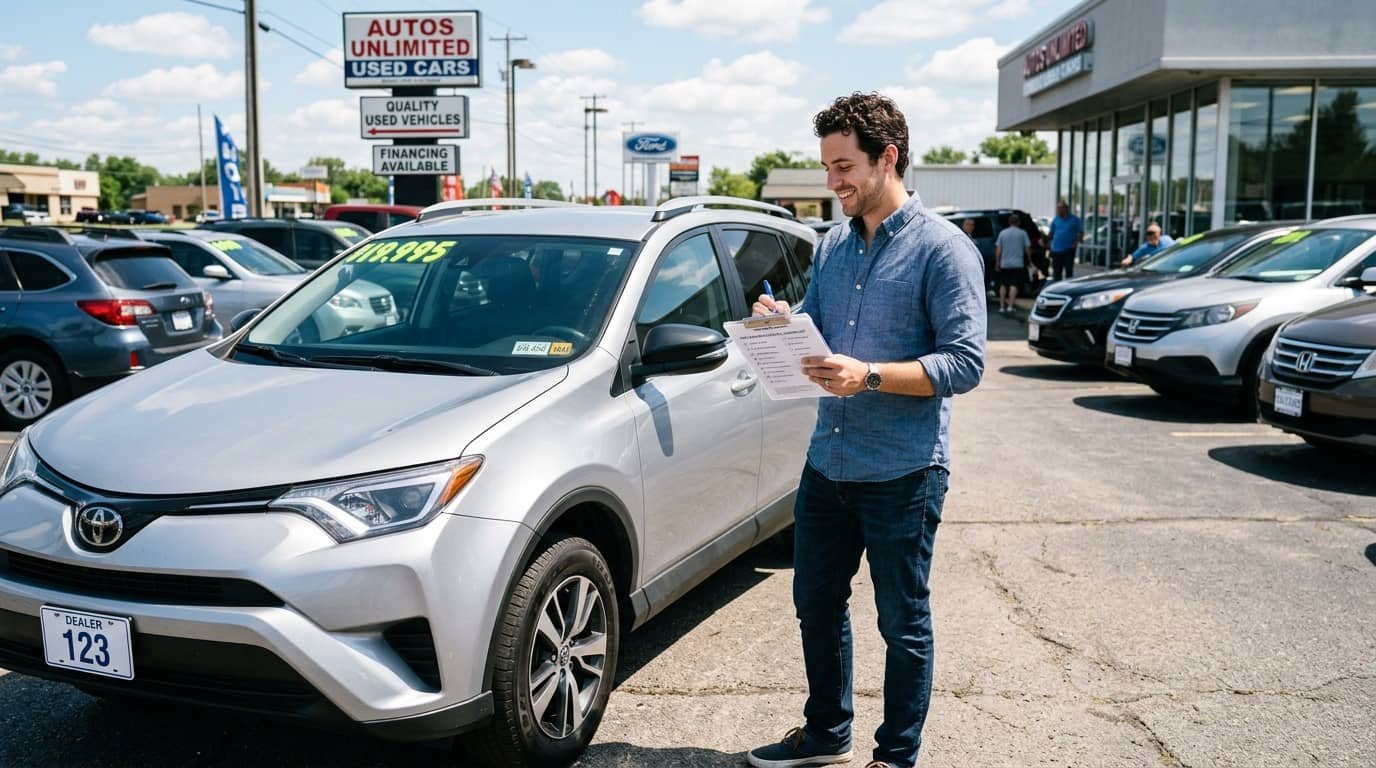
This used car buying checklist covers every step from running the VIN to signing the paperwork so nothing gets missed.
Buying a used car involves a lot of moving parts. There are things to check before you ever see the car, things to check in person, and steps to take before you sign anything. Miss one of them and you could end up with a vehicle that costs far more than you planned, or one that has problems you would have caught if you had looked in the right places.
This checklist covers the whole process in order.
Check the VIN before anything else and find out what the vehicle’s history actually shows.
Used Car Buying Checklist: Before You Go See the Car
Get the VIN and run a history check. Do not schedule a visit until you have done this. The VIN report shows title history, reported accident history, odometer records, lien information, and whether the car has any theft or salvage flags in its past. If the seller will not give you the VIN, that is your first red flag and our article on what to do when a seller won’t share the VIN covers exactly that situation.
Check the title history. Look for any salvage, rebuilt, flood, or lemon law brands. These designations are permanent and affect everything from insurance to resale value. Our articles on salvage titles and rebuilt titles explain what they mean in practice.
Research the going rate. Know what comparable vehicles are selling for before you see this one. A price that is significantly below market is either a great deal or a red flag. You need the context to tell the difference.
Check for open recalls. Search the VIN on NHTSA.gov to see whether the vehicle has any unfixed safety recalls. These are free to repair at a dealership but the seller may not have taken care of them.
When You See the Car in Person
Check body panel gaps and paint. Step back and look at the gaps around the doors, hood, trunk, and fenders. They should be even and consistent. Look along the surface for paint color or texture differences between panels, which can indicate prior repair work.
Look for rust. Check the wheel wells, the rocker panels along the bottom of the car, the door edges, and underneath the trunk carpet. Surface rust is different from structural rust. Structural rust on the frame or floor pans is a deal-breaker.
Check the tires. Uneven wear across a tire, or wear only on the inner or outer edge, suggests alignment or suspension problems that may trace back to prior collision damage.
Look under the hood. Check fluid levels and color. Oil that looks dark but within the normal range is a minor concern. Coolant that looks rusty or oil that looks milky indicates a more serious problem. Check for any active leaks around hoses or the engine block.
Check the interior. Smell for mold or mildew. Look for water lines around the seats and door panels. Check that all electrical features work, including windows, locks, climate control, and lights.
Test drive it. Pay attention to how the transmission shifts, whether the brakes pull to one side, any vibration at highway speed, and any noise from the suspension over bumps. Warning lights on the dash need an explanation.
Before You Commit
Get a pre-purchase inspection. Take the car to a trusted mechanic for an inspection before any money changes hands. A mechanic on a lift can see frame damage, rust, leaks, and worn components that are invisible to a visual inspection from the outside. Our article on what a pre-purchase inspection covers explains what to expect.
Confirm the title is in the seller’s name. The name on the title should match the person selling you the car. If it does not, find out why. Buying a car from someone who does not have the title in their name carries risk, and our article on title transfers explains the issue.
Ask about the history directly. Has it been in any accidents? Has any bodywork been done? Has it had any major mechanical repairs? How it was used? A seller who is forthcoming and consistent with details they cannot fake is a good sign. Vague answers or changing stories are not.
Negotiate based on what you found. Any issues uncovered during the inspection or the VIN check are fair grounds for negotiating the price down. A car needing near-term maintenance or with disclosed prior damage should not be priced the same as a comparable vehicle without those issues.
At Signing
Read the paperwork before you sign it. Confirm the VIN on the title matches the VIN on the car. Get a bill of sale with the VIN, sale price, date, and both parties’ names. Make sure any promises the seller made verbally are reflected in the written documentation.
And do not hand over money until you have the title in hand and confirm it is properly assigned to you.
The Bottom Line
Most bad used car purchases are preventable. The buyers who regret what they paid either skipped a step in this process or trusted the seller’s word over what the records and inspection showed.
The VIN report is the fastest and cheapest protection available. Pull it now on any car you are seriously considering.
Frequently asked questions
What is the single most important step in a used car buying checklist?
Running the VIN check before you go see the car. It takes two minutes and shows you the title history, mileage records, accident history, flood and salvage events, and lien status. It tells you whether the car you are considering is worth spending time on before you drive across town to look at it. Every other step on the checklist builds on having this information first.
How long does it take to properly evaluate a used car before buying?
Budget several hours spread across at least two contacts with the seller. Get the VIN and run the history report before the first meeting. At the meeting, do a thorough physical inspection and test drive. Then schedule a mechanic inspection before committing to buy. Sellers who pressure you to decide on the spot or who create urgency to skip any of these steps are telling you something. A car worth buying will still be there after you have done your homework.
What documents should you receive when buying a used car from a private seller?
The signed title with the seller’s name matching their photo ID. A bill of sale signed by both parties that includes the VIN, purchase price, date, and both parties’ names. Any available service records and maintenance receipts. In some states a bill of sale is legally required for registration. The title is non-negotiable: never hand over money without receiving the physical title at the same time.