
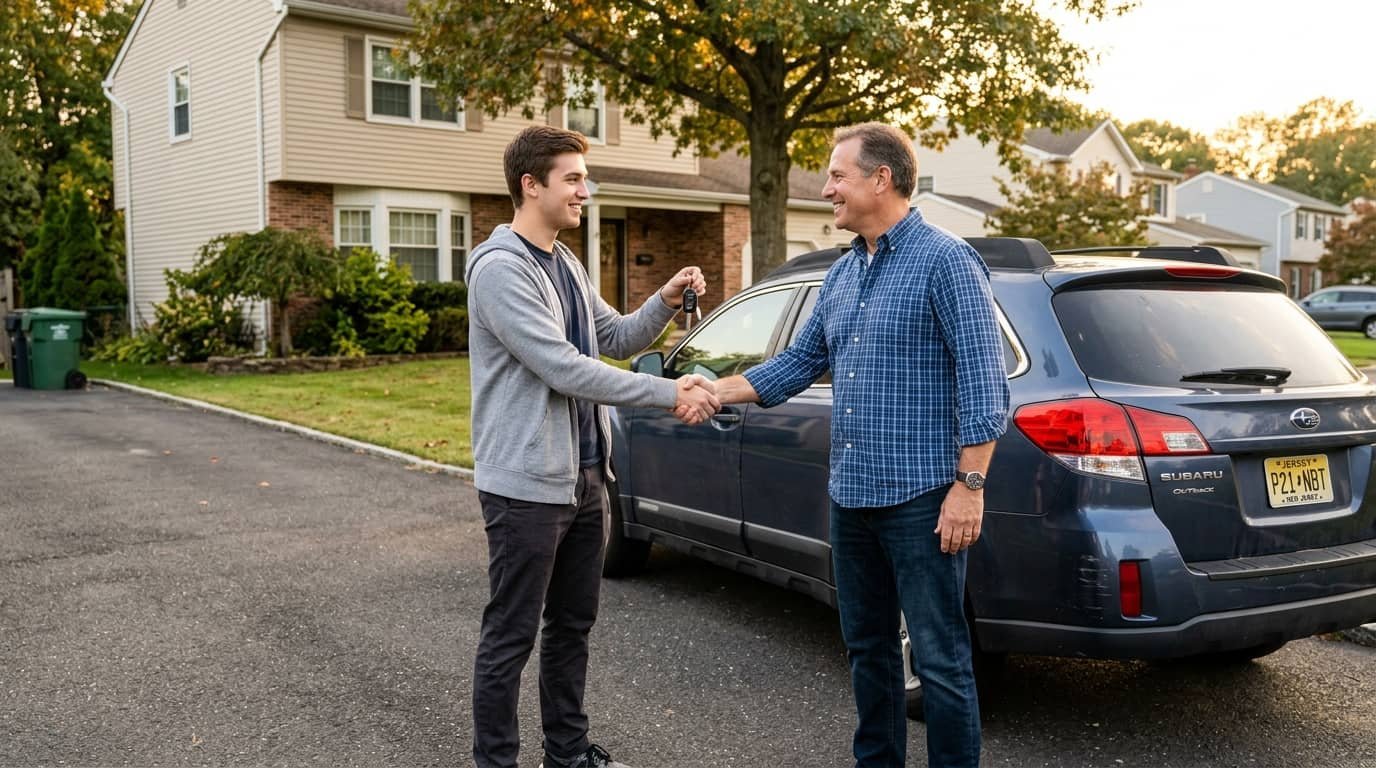
How to pay for a car from a private seller is one of those things buyers often do not think about until the last minute. The car checks out, the seller seems fine, and suddenly you are standing there trying to figure out the safest way to hand over the money.
That part matters more than people realize.
Payment is where private car sales can go wrong. A bad payment method can leave you with no car, no money, and no easy way to get either back. It happens more often than buyers expect.
Before you pay anything, make sure you have already checked the vehicle history. See what is on record for the vehicle so you know the title is clean, there are no liens, and the seller’s story holds up.
Once you are confident in the car, here is how to handle the payment itself.
How to Pay for a Car From a Private Seller and What to Confirm
This comes first, before any discussion of the payment method.
If there is an outstanding loan on the vehicle, the lender holds the title. The seller cannot legally sign it over to you until that loan is paid off. If you hand over money before confirming the title situation, you could end up with a car you cannot register.
Ask the seller directly: is there a loan on this car? Then verify it independently through a vehicle history report. Do not skip this step.
Also confirm that the name on the title matches the name of the person you are buying from. If it does not, stop. That is a different problem entirely, and it is covered in our article on what to do when a seller won’t give you the VIN.
Cash
Cash works and is immediate. There is no waiting for funds to clear, no risk of a bounced payment, and no way for the seller to claim they never received it.
The downside is risk on your end. Carrying a large amount of cash to meet a stranger is not ideal. If something goes wrong, the money is gone with no paper trail.
If you use cash, meet at the seller’s bank or a police station safe exchange zone. Many local police departments offer their parking lot as a neutral meeting point for exactly this kind of transaction. Do the handoff in a visible, public place and bring someone with you.
The IRS also requires banks to report cash deposits over $10,000. This does not mean anything illegal, but it is worth knowing if the car price is in that range.
Cashier’s Check
A cashier’s check is a common choice for private car sales, but it comes with a risk that most buyers do not know about.
Cashier’s checks are easy to fake. Counterfeit ones look legitimate, and banks sometimes make funds appear available before the check actually clears. Sellers have handed over a car based on a check that later bounced. Buyers have also been scammed with fake checks in the other direction.
If you use a cashier’s check, get it from your own bank and meet the seller at their bank so they can verify it in person with a teller. Do not rely on the seller calling a phone number printed on the check to verify it. That number may be fake.
Both parties should sign the bill of sale at the same time the check is verified. Do not hand over the check and walk away hoping for the best.
Wire Transfer
A wire transfer sends money directly from your bank account to the seller’s. It cannot be faked and cannot bounce.
The problem is that it also cannot be reversed. If you wire money to a scammer, it is gone. Wire transfers offer no fraud protection whatsoever.
Only use a wire transfer if you have already met the seller in person, verified the title, and confirmed the car exists and matches what was advertised. Never wire money to someone you have only spoken to online or over the phone.
Zelle, Venmo, PayPal, and Cash App
These are fine for splitting a dinner bill. They are not designed for car purchases.
None of these apps offer fraud protection for vehicle sales. PayPal explicitly excludes motorized vehicles from its buyer protection program. Zelle has no recourse if you are scammed. Venmo is the same.
If you send money through one of these apps and the deal falls apart, you have almost no way to recover it. The apps will not help you. Your bank likely cannot help you either.
Avoid these for any significant private car transaction.
Escrow Services
For higher-value purchases, an escrow service is worth considering. The buyer deposits funds with a neutral third party. The seller ships or hands over the car. Once the buyer confirms everything is correct, the escrow releases the funds to the seller.
This protects both sides. The seller knows the money is real and available. The buyer knows the funds are not released until they are satisfied.
Legitimate escrow services charge a fee, usually a small percentage of the transaction. If a seller pushes you toward a specific escrow site you have never heard of, be careful. Fake escrow scams exist specifically to target private car buyers.
What to Have Ready at the Time of Payment
Regardless of how you pay, have these things in order before money changes hands:
- The vehicle title, signed by the seller in front of you
- A bill of sale signed by both parties with the date, price, VIN, and both names
- Confirmation that the title is clean and matches the seller’s ID
- Your own ID
- Proof that any existing loan on the vehicle has been paid off, if applicable
Do not sign the title over or hand over payment until you have physically seen and reviewed the title. Once your money is gone and the title is signed, the deal is done.
Never Pay Before You Run the VIN
Payment method matters, but it does not fix a bad vehicle. If you pay safely for a car that turns out to have a salvage title, flood damage, or an open lien, you still have a problem.
Run the VIN before you get to the payment stage. Check what is on record for this vehicle and make sure the history matches what the seller told you. That is the step that protects you before the money ever leaves your hands.
Frequently asked questions
Is cash the safest way to pay a private seller for a car?
Cash is simple but carries risk if you are meeting a stranger with a large amount on you. A cashier’s check from your bank is widely accepted, harder to dispute than personal checks, and does not require you to carry large amounts of cash. For high-value purchases, a bank wire or escrow service adds another layer of protection. Whatever method you use, get a signed bill of sale with the VIN, price, and date before money changes hands.
Should you ever pay a deposit before seeing a car from a private seller?
No. Any seller asking for a deposit before you have seen and inspected the car in person is a serious red flag. Legitimate sellers do not require deposits to hold a car for you. Requests for deposits via wire transfer, gift cards, or payment apps from sellers you have not met are almost always scams.
What paperwork should you get when buying a car from a private seller?
Get the signed title at the time of sale, with the seller’s name matching their photo ID. Get a bill of sale signed by both parties that includes the VIN, the purchase price, the date, and both names. In some states a bill of sale is required for registration. Do not leave without the physical title in hand.