
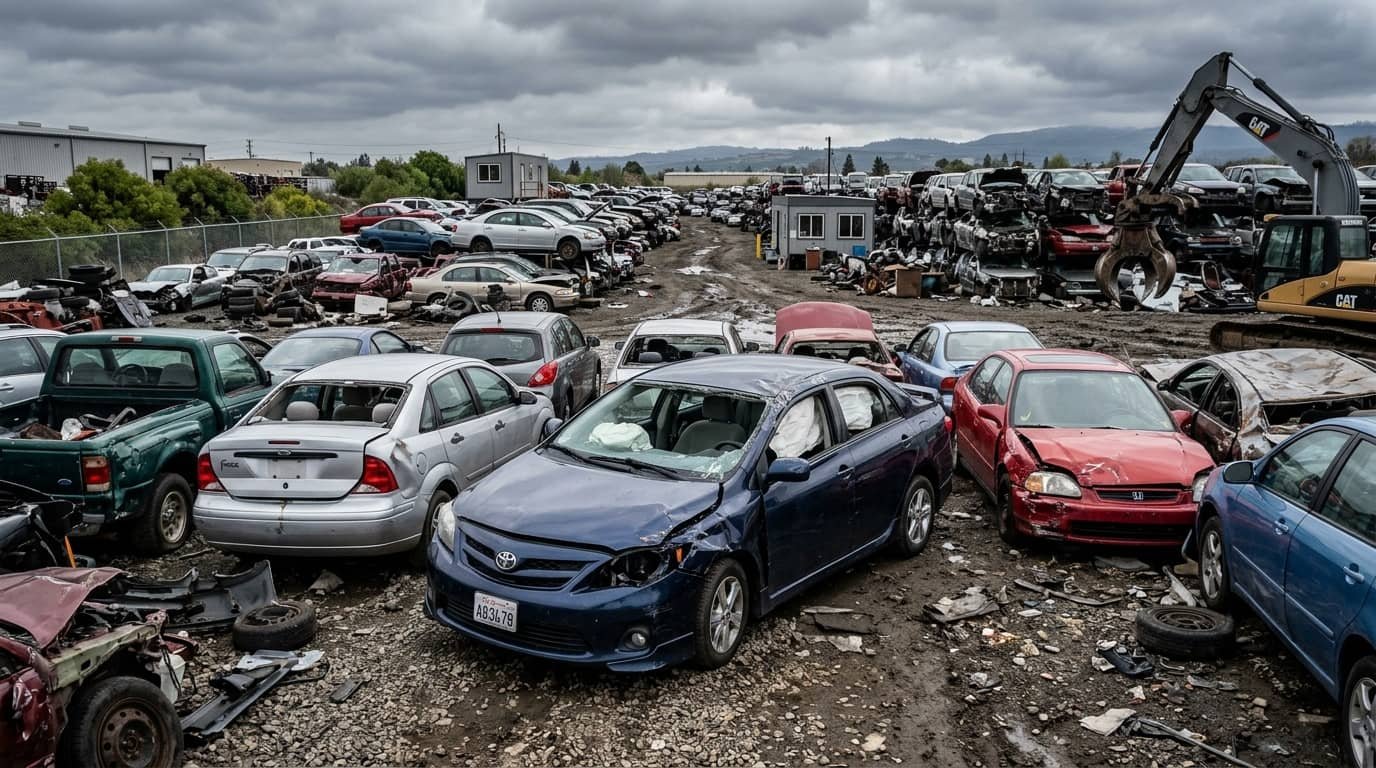
What is a salvage title? It means the car was declared a total loss at some point, and that history now follows the vehicle permanently.
Understanding what a salvage title is and what it means for a vehicle is essential before buying any used car.
A salvage title usually happens when an insurance company determines that the cost to repair the car is too close to or exceeds its value, so instead of fixing it, they write it off.
That branding stays on the title permanently. It does not go away when the car is repaired, and it follows the vehicle through every future sale.
Before you go further with any used car, check the title history. Run the VIN here to see whether a salvage brand shows up in this vehicle’s record.
How a Car Ends Up With a Salvage Title
The most common cause is a collision serious enough that the insurer decided the repair cost was not worth it. But salvage titles also get issued for:
- Flood damage
- Fire damage
- Hail damage
- Theft recovery where the car was stripped or damaged before it was found
- Vandalism
Each of those causes has different implications for how risky the car is to own. A hail-damaged car that received a salvage title might be structurally fine underneath the cosmetic damage. A flood car or a car with a serious collision history is a different situation entirely.
What Happens After a Car Gets a Salvage Title
In most states, a salvage-titled car cannot be legally driven on public roads. It can be repaired and then inspected by the state, and if it passes, it gets a rebuilt title. The rebuilt title documents that the car was once salvage, was repaired, and has been inspected.
Some salvage cars are never repaired and are sold only for parts. Others are sold as-is, with the understanding that the buyer takes on full responsibility for whatever condition they are in.
Our article on what a rebuilt title means goes into more detail on what that inspection process covers and what it does not.
The Real Risks of Buying a Salvage Title Car
Structural safety. If the car was totaled in a collision, the frame and crumple zones absorbed an impact they were designed to absorb once. That metal cannot be bent back to original spec and retain the same protective qualities. Repairs can make the car look right without making it safe in a future crash.
Hidden damage. Flood cars in particular carry damage that does not always show up immediately. Corrosion builds up in places you cannot see. Electrical systems fail in unpredictable ways months or years after the water damage. Mold grows under carpets and in the HVAC system.
Repair quality. Shops that rebuild salvage vehicles are often cutting costs to maximize profit on the resale. That can mean low-quality replacement parts, shortcuts in the repair work, and issues that only become apparent after you own the car for a while.
Insurance problems. Many insurers will not write comprehensive or collision coverage on a salvage or rebuilt vehicle. Those that will often charge more. If you cannot get the coverage you need, that affects your financial exposure if something goes wrong.
No financing. Most banks and credit unions will not finance a salvage title car. You are typically looking at a cash purchase.
Warranty void. Even if the car is relatively new, the manufacturer warranty is gone the moment a salvage title is issued. That coverage does not transfer with the car.
Resale difficulty. When it comes time to sell, you will face the same conversations you are having now. Buyers will negotiate hard on price, and some will walk away entirely. Budget for keeping this car longer than you originally planned.
When a Salvage Title Might Be Acceptable
There are situations where buying a salvage title car makes sense. A hail-damaged car with no structural issues might be worth buying at a steep discount if you plan to drive it for years and do not care about the cosmetic damage. Parts cars for a project vehicle are another case where the title status does not matter much.
The key is knowing exactly what you are dealing with before you commit. That means a full inspection by an independent mechanic, a detailed look at what caused the total loss, and a realistic assessment of what the rebuild involved.
How to Check Before You Buy
The seller is required to disclose a salvage title in most states, but disclosure rules vary and enforcement is inconsistent. Sellers of private party cars sometimes omit this information hoping buyers will not check.
Running the VIN will show you the title history, including any salvage or rebuilt branding. If the car has ever been branded, that record should appear.
Check the title history on this VIN now before this conversation goes any further.
Frequently asked questions
What percentage of damage causes a car to get a salvage title?
Most states issue a salvage title when repair costs exceed a certain percentage of the car’s actual cash value, typically between seventy-five and one hundred percent depending on the state. This threshold varies, which is why a car with the same level of damage might receive a salvage title in one state but not another. The insurer makes the total loss determination based on their assessment of repair cost versus pre-accident value.
Can a salvage title car be rebuilt and sold legally?
Yes. A salvage vehicle can be repaired and submitted for inspection. If it passes, the state issues a rebuilt title, which allows it to be registered, driven, and sold. The seller must disclose the rebuilt status to any buyer. The car’s history as a former salvage vehicle remains permanently in the VIN report regardless of how it is titled after the rebuild.
How do you check if a car has a salvage title before buying?
Run the VIN through a vehicle history report before you go see the car. The title status is one of the first things the report shows. You can also ask to see the physical title before any money changes hands, since the word salvage or rebuilt will appear on the title document itself. Do both. A seller who is hesitant to show you the title or who claims not to have it available is a reason to slow down.